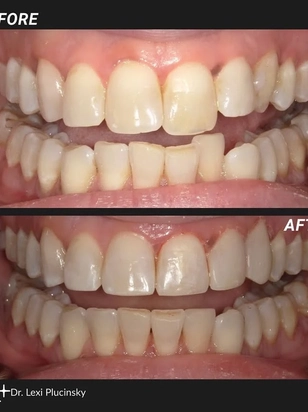
Composite dental fillings are tooth-colored restorations used to repair teeth affected by cavities or minor damage. At University Suburban Dental, our dentist provides composite dental fillings in South Euclid, Ohio, using resin material selected to blend naturally with your tooth color while restoring the damaged area.
Call 216-381-6521 to schedule an appointment with Dr. Lexi Plucinsky and learn whether a composite filling may be appropriate for your tooth.
What Are Composite Dental Fillings?
Composite dental fillings are restorations made from tooth-colored resin material. They are commonly used to repair cavities and other small areas of tooth damage while maintaining a more natural appearance than metal-colored fillings.
Because the material is selected to coordinate with the surrounding tooth, composite fillings can be especially useful in areas that are visible when you smile.
When Is a Composite Filling Needed?
Dr. Plucinsky may recommend a composite filling when a tooth has a cavity or another localized area of damage that can be repaired without a more extensive restoration.
Composite fillings may be used to treat:
- Small to moderate cavities
- Minor chips or worn areas
- Selected areas of damaged tooth structure
- Older fillings that need to be replaced
The right treatment depends on how much healthy tooth structure remains and the location of the damage.
Benefits of Composite Dental Fillings in South Euclid, OH
Composite fillings offer several practical and cosmetic advantages for appropriate cases.
Potential benefits may include:
- Tooth-colored material that blends with your smile
- Bonding directly to the prepared tooth structure
- Conservative treatment for many small or moderate cavities
- Use in both visible and less visible areas of the mouth
- Ability to repair certain chips or minor defects
Dr. Plucinsky will determine whether composite material is appropriate based on the location, size and condition of the tooth.
How Does the Composite Filling Procedure Work?
Your appointment begins with an evaluation of the affected tooth. If a filling is appropriate, the damaged or decayed portion of the tooth is removed and the area is prepared for restoration.
The process may include:
- Removing decay or damaged tooth structure
- Cleaning and preparing the area
- Selecting a composite shade that matches the tooth
- Placing the resin material in layers
- Hardening the material
- Shaping and polishing the final restoration
Dr. Plucinsky will also check your bite after the filling is placed and make adjustments as needed.
Can Composite Fillings Be Completed in One Visit?
Many composite fillings can be completed in a single appointment. The exact treatment time depends on the size and location of the cavity, the number of teeth being treated and the condition of the tooth.
Dr. Plucinsky can give you a more specific idea of what to expect after examining the area.
Composite Fillings vs. Amalgam Fillings
Composite and amalgam fillings are both used to restore teeth, but they differ in appearance and material.
Composite fillings are tooth-colored and bond directly to the prepared tooth. Amalgam fillings are metal-colored and use a different restorative material and placement technique.
The most appropriate option depends on the tooth, the extent of damage and your individual treatment needs.
How Long Do Composite Dental Fillings Last?
The lifespan of a composite filling varies depending on the size and location of the restoration, your bite, oral habits and how well you care for your teeth.
Over time, fillings may wear, chip or need replacement. Regular dental cleanings and exams allow our team to monitor existing restorations and identify changes that may need attention.
How Do I Care for a Composite Filling?
Composite fillings should be cared for much like natural teeth. Brush thoroughly, floss regularly and keep routine dental appointments.
Avoid using your teeth to bite hard objects or open packages, as excessive force can damage both natural teeth and restorations.
If you grind or clench your teeth, Dr. Plucinsky may recommend a night guard to help protect your teeth and dental work.
What If a Tooth Needs More Than a Filling?
A filling may not be the best option when a tooth has extensive decay, a large fracture or significant loss of structure. In these cases, Dr. Plucinsky may recommend a more protective dental crown or another restorative treatment.
If the damage extends into the dental pulp, root canal therapy may also need to be considered.
Composite Fillings and Cosmetic Dentistry
Because composite material can be matched to the surrounding tooth, it may also be used in certain cosmetic applications. However, a filling is primarily intended to restore damaged tooth structure.
For concerns focused mainly on appearance, Dr. Plucinsky may discuss options such as dental bonding or other cosmetic dentistry treatments.
Schedule a Composite Filling Appointment in South Euclid, OH
If you have a cavity, damaged filling or minor tooth damage, a composite filling may provide a conservative way to restore the tooth and protect it from further problems.
Contact our office or call 216-381-6521 to schedule an evaluation for composite dental fillings in South Euclid, Ohio.
Composite Dental Fillings FAQs
What are composite dental fillings?
Composite dental fillings are tooth-colored resin restorations used to repair cavities and certain areas of minor tooth damage.
Are composite fillings tooth-colored?
Yes. Composite resin can be selected in a shade designed to blend with the surrounding natural tooth structure.
How long do composite fillings last?
The lifespan varies depending on the size and location of the filling, your bite, oral habits and how well the restoration is maintained.
Can composite fillings be completed in one visit?
Many composite fillings can be completed in one appointment, although treatment time depends on the number of teeth involved and the extent of the damage.
Are composite fillings better than amalgam fillings?
Neither option is automatically better for every tooth. Composite fillings provide a tooth-colored appearance and bond directly to the tooth, while the most appropriate material depends on the specific clinical situation.
Can a composite filling fix a chipped tooth?
Composite material may be used for certain small chips or worn areas, depending on the amount and location of the damage. Dr. Plucinsky can determine whether a filling, bonding or another treatment is more appropriate.
What happens if my cavity is too large for a filling?
If too much tooth structure has been lost, Dr. Plucinsky may recommend a crown or another restorative treatment that provides more coverage and support.
How do I know if I need a filling?
A dental examination is needed to determine whether a cavity or damaged area requires treatment. Contact our office or call 216-381-6521 to schedule an evaluation.